Learning About Writing, Researching, and Finding my Voice

Photo by: Ayşenaz Bilgin
At First..
When I entered the class, I thought writing was mostly about getting your ideas down clearly and following a prompt your teacher chose for the class. I didn’t realize how much writing changes depending on your audience, your purpose, and even the format you’re using. Looking back at this semester, I can see that I didn’t just learn how to write better, but I also learned how to think more critically about why I’m writing and who I’m writing for.
What I learned
One of the biggest things I learned was how to adjust my writing for different audiences. At the beginning of the semester, I tended to write everything in the same tone, usually academic and straightforward. But through blog posts and rhetorical analysis assignments, I realized that writing isn’t one-size-fits-all. For example, when I wrote my blog posts, I had to be more personal and engaging, using my own experiences to connect with readers. In contrast, my research paper required a more structured and analytical tone. That shift helped me understand that effective communication depends on meeting your audience where they are.
I also learned how to write in different genres. Before this class, I had never really thought about what made a blog post different from an academic essay. Through assignments like the counterstory blog and interview reflection, I started to see how genre shapes the way ideas are presented. Blogs allow for more voice and reflection, while research papers focus on building an argument with evidence. One of my biggest “lightbulb moments” was realizing that both forms are valuable as they both serve different purposes. That changed how I approach writing because I now think about the format before I even start.
Research was another area where my understanding completely changed. I used to think research was just about finding sources that support your argument. But this semester, I learned that research is about analyzing those sources and understanding how they use rhetoric. My interview was especially important in this process. Hearing someone’s personal experience with theater burnout made the issue feel more real in a way that articles alone couldn’t. I got to ask my own questions and I was able to connect with my interviewee in a way that I couldn’t have with an already published article. It also showed me how primary research can add depth to an argument by bringing perspectives that are often missing.
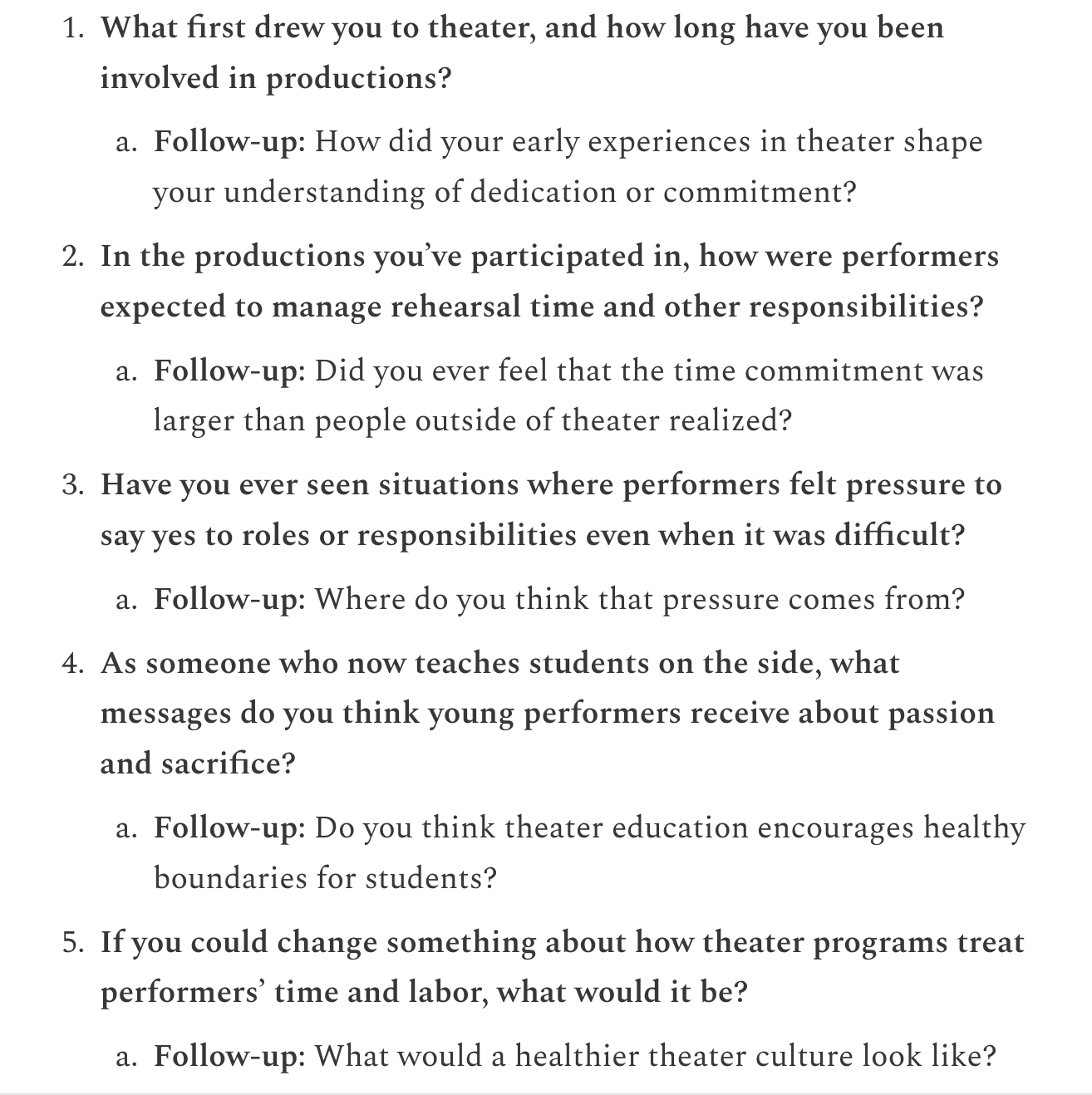
A section from my interview prep blog post where I developed research questions and began thinking more critically about my topic and audience
These experiences transformed how I think about communication. I now understand that writing isn’t just about presenting information, but instead it’s about how people see a problem. The way something is framed, the words that are used, and the voices that are included all influence how an audience understands an issue. This is something I will carry forward, especially when writing about topics that involve power and social structures.
In My Future Writing
Moving forward, I want to continue developing my ability to balance analysis with my own voice. I’ve learned that my personal perspective can strengthen my writing rather than weaken it, especially when combined with research. I also want to keep improving how I integrate sources, making sure they support my ideas instead of just being added in.
Overall, this class helped me become a more intentional writer. I’m leaving with a better understanding of how to adapt my writing, how to analyze sources, and how to communicate ideas effectively across different contexts. These are skills I know I’ll use not just in future classes, but in any situation where I need to express my thoughts clearly and persuasively.
I totally agree on what you want to improve on moving forward, because I think your goals are applicable to everyone.